The Man Who Told Apple to Assemble the Computer: Paul Terrell and the Byte Shop
Fifty years ago, a computer was something you soldered together yourself. Then Paul Terrell said no.
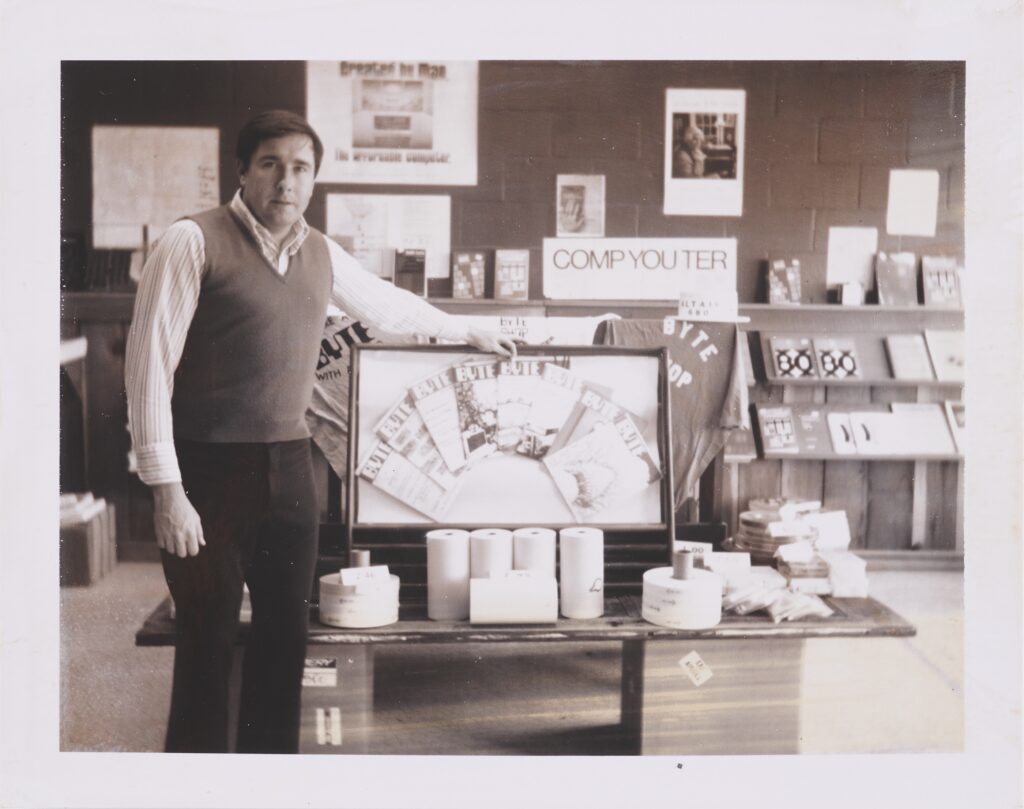
For Apple’s 50th anniversary, RR Auction brought together a group of artifacts consigned directly from the personal collection of Paul Terrell, the founder of The Byte Shop, the world’s first personal computer retail chain and the man whose single order changed what a personal computer was allowed to be. We sat down with Paul, now 83, to hear the story in his own words.
The order that started Apple
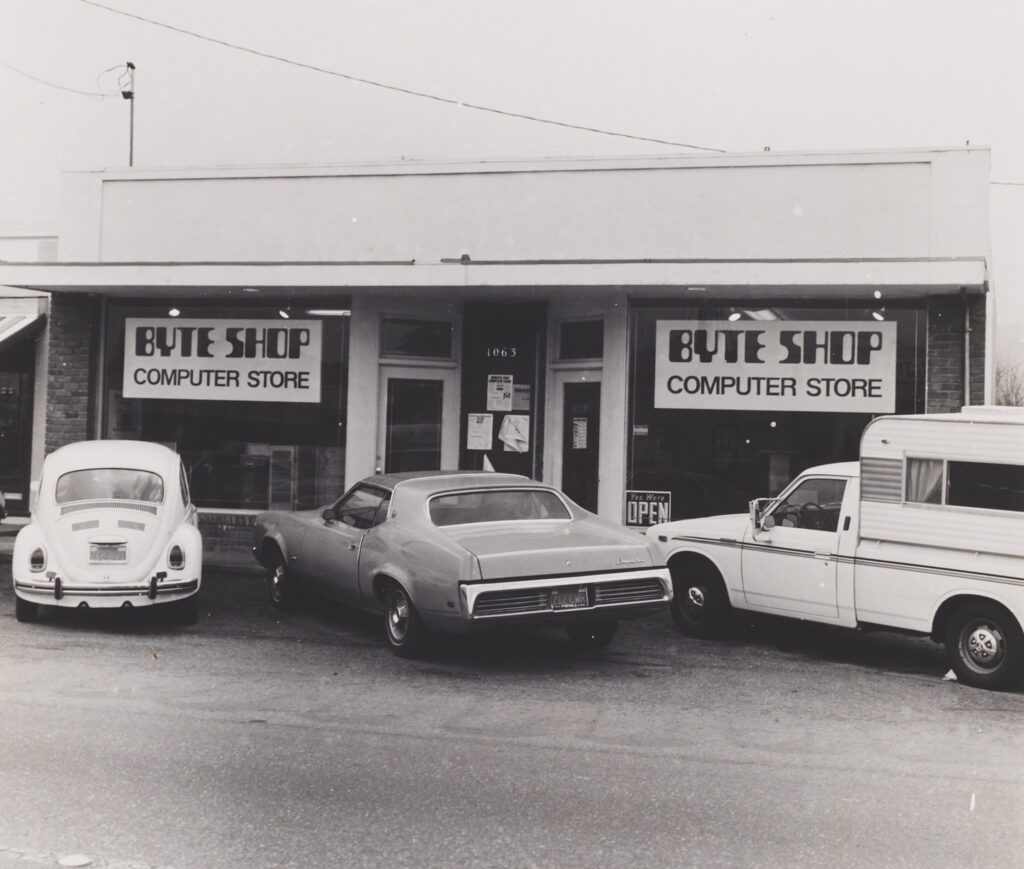
In the spring of 1976, Terrell was the MITS representative at Palo Alto’s Homebrew Computer Club, handing out newsletters and fielding questions while he built out his new Byte Shop stores. A week earlier at the WestCon show in San Francisco, he had watched Chuck Peddle sell the brand-new MOS 6502 microprocessor out of a hotel suite for a single twenty-dollar bill, at a time when an Intel 8080 ran about eight hundred dollars. Suddenly a room full of engineers all owned a cheap, powerful chip and had no idea what to do with it.
Steve Wozniak had the answer, and Terrell watched it happen. “Woz was up on the stage giving the schematic away,” he remembers. “If you wanted to do something with your 6502, he’d tell you, here’s a design I’ve done. He had a wire-wrap prototype running just outside the doors at the Stanford Linear Accelerator, and my spot at Homebrew was right inside that door. I watched people crowd around his display. You could feel the interest in it.”
Jobs was selling the bare boards for forty dollars. Terrell was interested, but not in another kit. “I had kits coming out of my ears,” he said. “I needed an assembled and tested computer, because I had programmers and other people coming into the store who couldn’t solder a board together.” He stopped Jobs and handed him a card. “I told him, I’m interested in this computer. He came down to the Byte Shop the next day.”
What walked in the door did not inspire much confidence. “When did I know they had no money? The second they walked in,” Terrell laughed. “Long hair, shaggy, flip-flops. You looked at them and thought, is this really serious?”
It was serious enough. Terrell offered to buy fifty computers at five hundred dollars apiece, to retail at $666.66, but only if they came fully assembled. Wozniak later called it “the biggest single episode in all of the company’s history. Nothing in subsequent years was so great and so unexpected.” Jobs, for his part, worked the personal angle. “His dad’s name was Paul, my name’s Paul, so he told me we were family,” Terrell said. “You already stock transformers and keyboards for all these other kits, he told me, so my board is no problem for you.”
Jobs walked out of the Byte Shop that day with the biggest order of his life and no way to fill it. The commitment was cash on delivery, fifty assembled computers, and Apple did not have the money to buy the parts to build a single one.
Terrell is blunt about how precarious it was. “Jobs and Wozniak never had a business plan. They didn’t know what was going on,” he said. “A couple of scruffy kids, and who’s going to invest in them? Woz had sold his calculator, Steve sold his Volkswagen bus, and I don’t think they ever even collected the money on either one.” What they walked away with was one order from the Byte Shop, and about a month to turn it into a company.
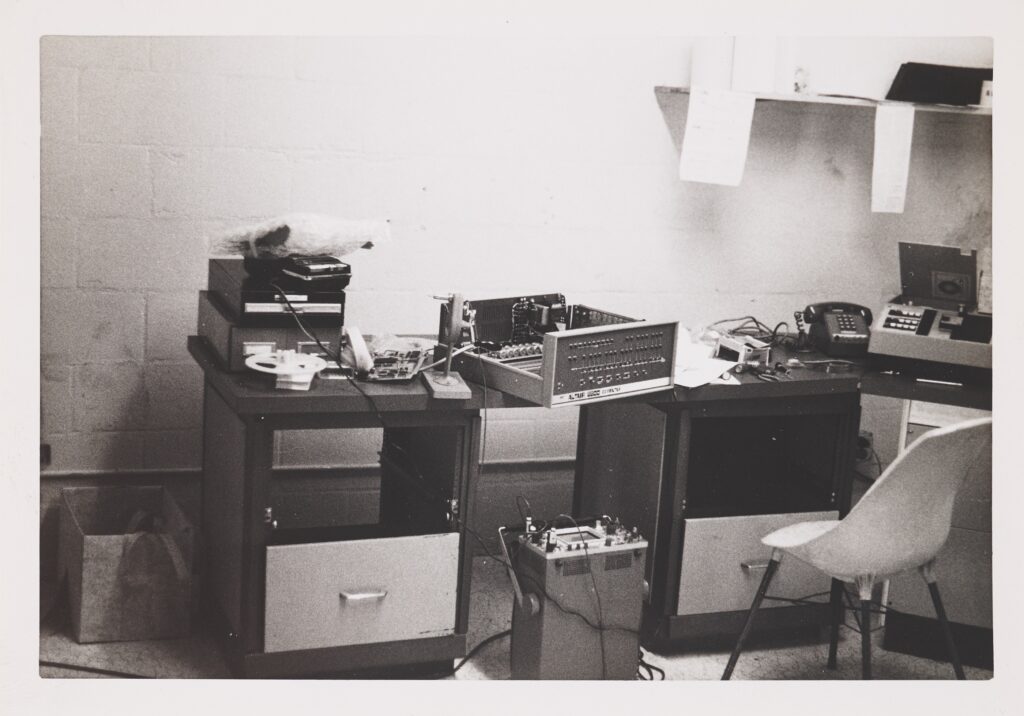
The Byte Shop work order that built the first fifty
So how did two kids with no money and no business plan fill a $25,000 order? The number itself is the part most people get wrong. It was a prize, not a bankroll, and the terms were cash on delivery.
The answer was the Byte Shop order itself. Jobs carried the purchase order into Cramer Electronics and turned it into collateral: give me the components on net-30 terms, he argued, and I will build the computers, deliver them to Terrell, collect on delivery, and pay you. It worked, but only because the distributor wanted Terrell’s word first, and Terrell remembers exactly where he was when they tracked him down.
“I was down in Pacific Grove at the Asilomar microprocessor conference, giving a talk on the future of the neighborhood computer store,” he said. “Somebody at the podium asked if Paul Terrell was in the audience. I raised my hand, and they told me I had a phone call up front. I walked up there thinking, my God, what happened, did one of my kids get hurt, is this a hospital? It was the man from Cramer Electronics. He wanted me to confirm I’d stand behind the order. If he gave Jobs and Wozniak the parts on net-30 terms, would I pay on delivery so they could pay him? That was the whole deal.” Apple walked away with roughly $15,000 in parts on thirty days’ credit.
The fully assembled computer he wanted did not arrive, but Terrell honored the order anyway. “What showed up wasn’t really the finished computer I’d ordered. I could have reneged, told them this isn’t what I wanted,” he said. “But it was good enough, and I saw the opportunity. Steve said, you can move these and sell them, so please do. And we did.”
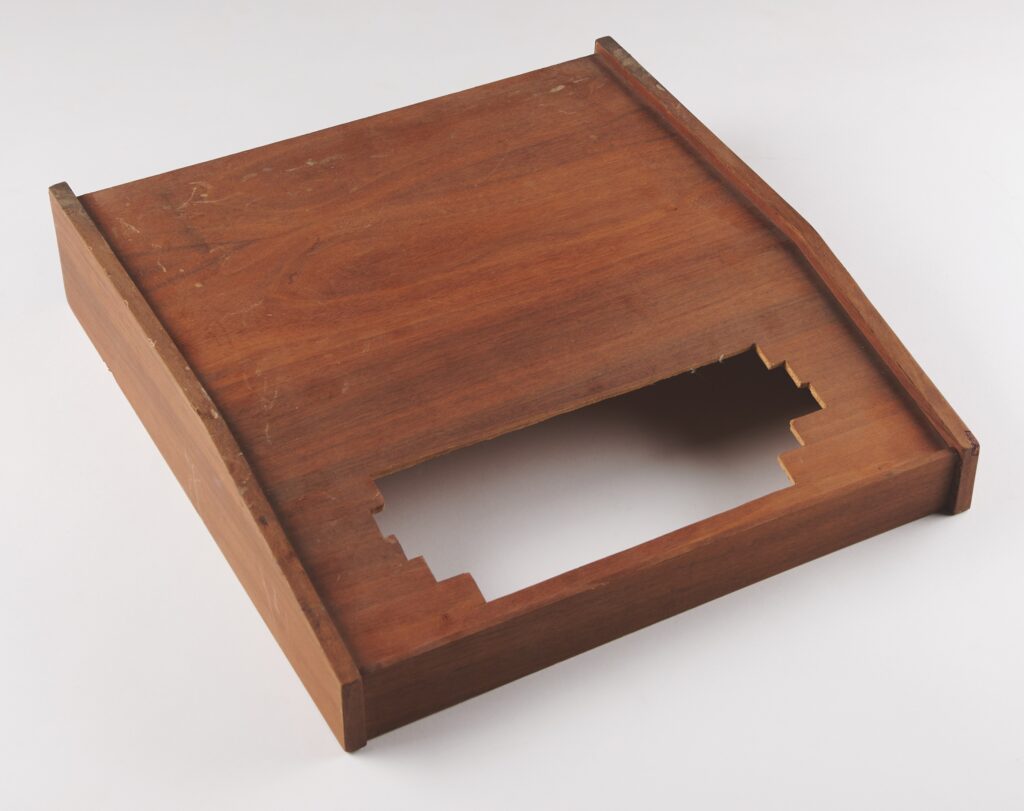
So the twenty-five thousand was the finish line, not the starting gun. The start was the Byte Shop work order, $15,000 of parts extended on trust, and one retailer willing to bet on two kids in flip-flops.
What Paul kept
Terrell went on to build the Byte Shop into a chain, and he held onto the machines and paper that tell the story. Among what he kept:
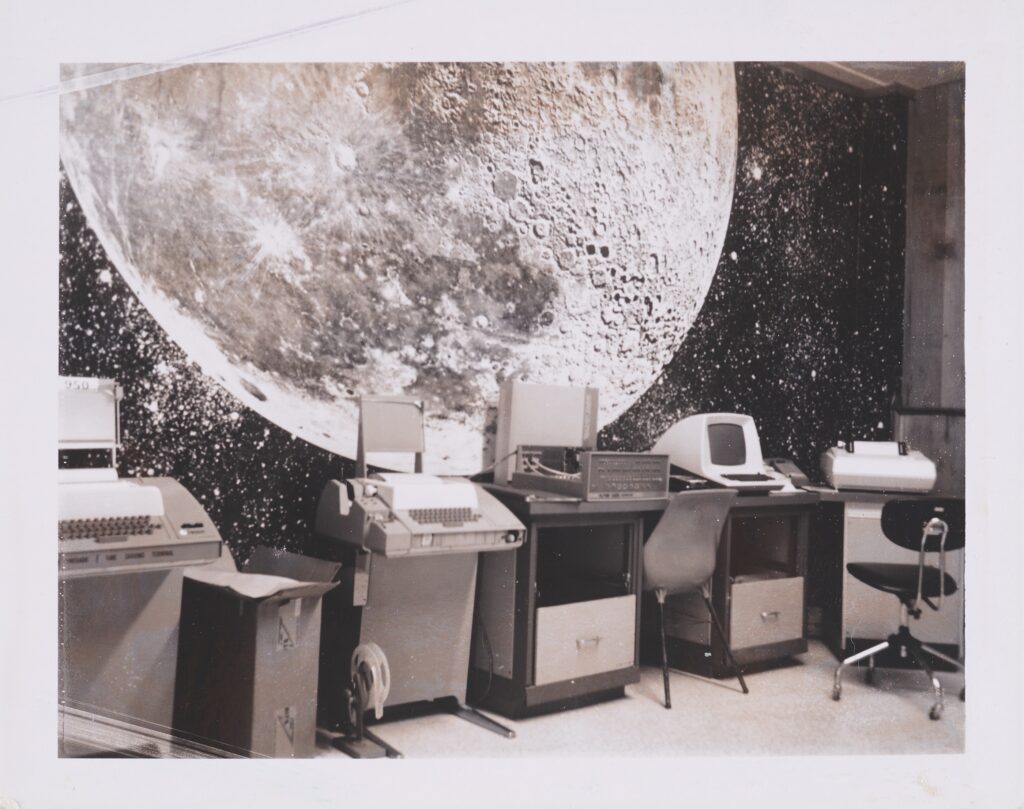
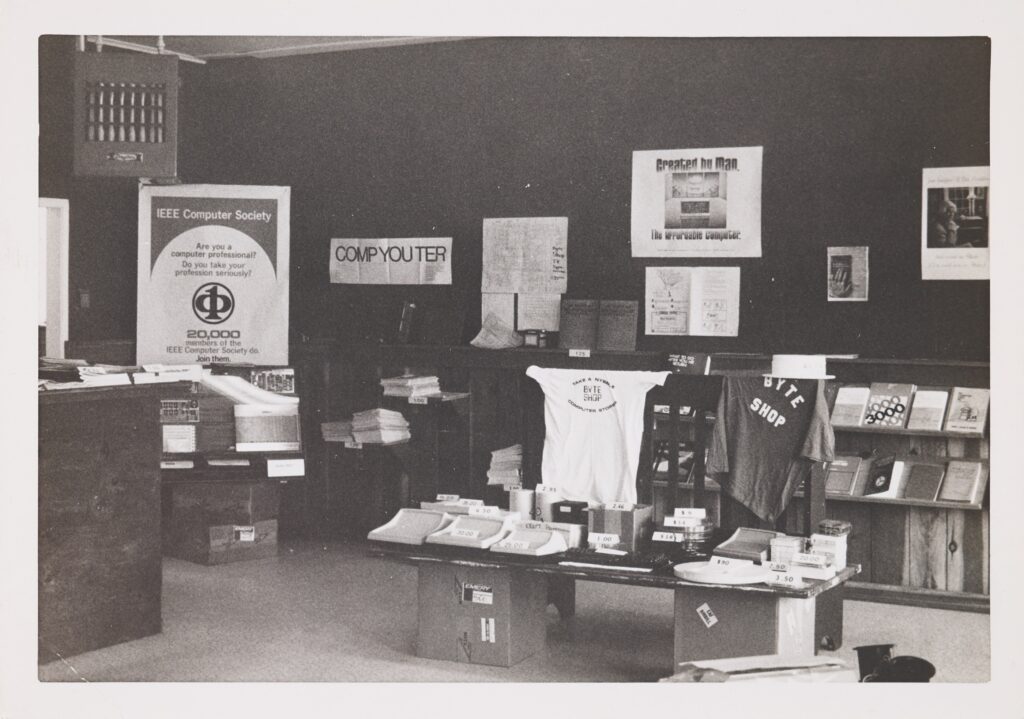
- Lot 4169: A museum-grade visual archive of The Byte Shop, the world’s first computer store
- Lot 4170: The Byte Shop’s own proprietary BYT-8 computer, the house-brand system Terrell built for his stores
- Lot 4171: An Exidy Sorcerer S-100 Expansion Unit
- Lot 4172: A Processor Technology Sol-20, widely recognized as the first true all-in-one personal computer
- Lot 4173: An Exidy Sorcerer, a machine built from a concept Terrell himself originated
- Lot 4174: A TeleVideo PT-100 Personal Terminal
- Lot 4175: Issue #1 of Byte magazine, signed by founding editor Carl Helmers
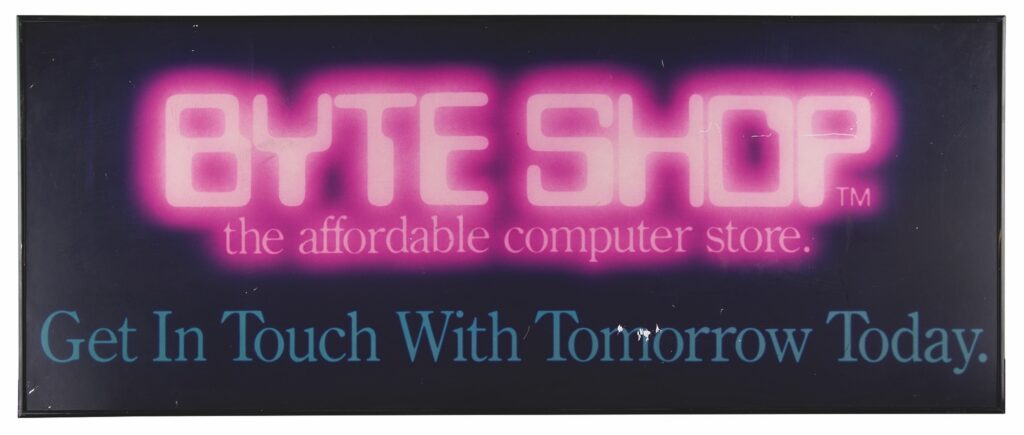
- Lot 4176: The original storefront sign from Byte Shop Northwest, run by Terrell’s brothers
- Lot 4177: A collection of seven vintage computing magazines
- Lot 4178: Eight issues of the Altair Users Group’s Computer Notes, 1975 to 1976
Each piece connects back to the moment the personal computer moved off the workbench and onto a store shelf. As Terrell puts it, the Byte Shop was where “publication, product, and marketplace” all came together at once.
History repeating itself
There is a coda, and it is pure Paul Terrell. On April 1 of this year, he called Wozniak with an idea: run the whole deal again for Apple’s 50th. He would write a fresh purchase order, fifty computers at five hundred dollars each, exactly as he did in 1976. “I told Woz I wanted history to revisit itself,” Terrell said. “He’s a prankster. He loved it. He said, count me in.”
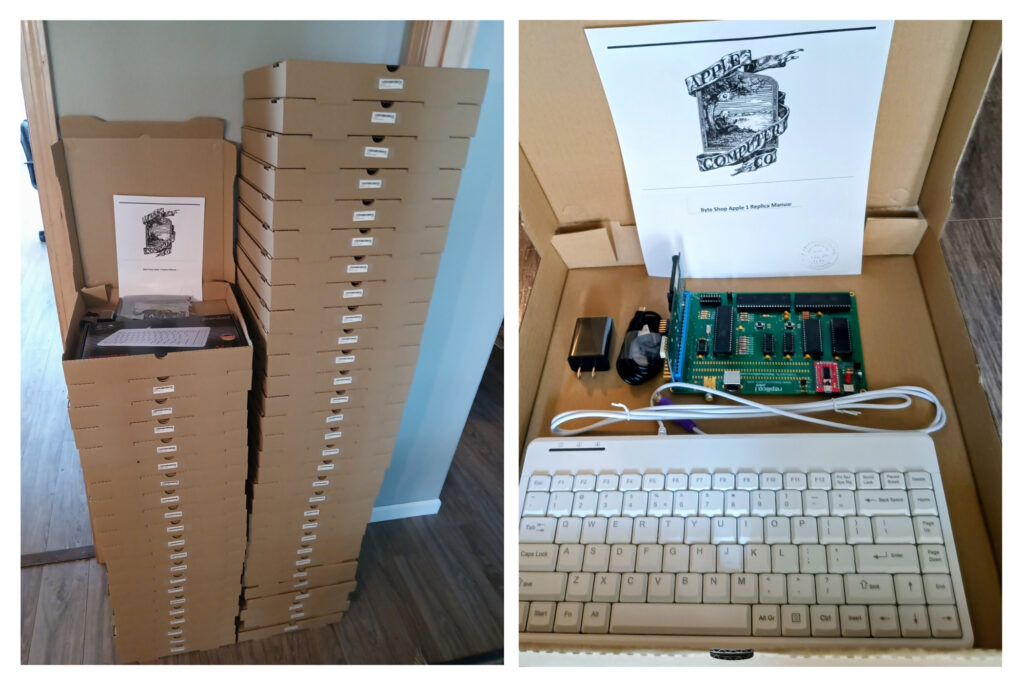
Working with a company called Retro Active Micro, they built fifty replica Byte Shop Apple-1 kits, packed in pizza boxes like the ones Jobs once stacked on the floor, and priced, of course, at $666.66. This time Terrell is the one delivering the fifty machines.
He is bringing all of them to the Vintage Computer Festival, and he is turning it into a reunion. Wozniak, Chris Espinosa, Bill Fernandez, and Daniel Kottke, the old garage crew, are all expected. Kottke plans to demo one of the replicas running an AI chatbot, fifty years of computing on one board. When Terrell asked Woz if he would come, the answer took about twenty minutes: “Paul, I’m there.”
“I’m 83 years old and surprised half these guys are still around,” Terrell laughed, “much less that they’ve still got the product and they’re demoing it.”
Paul Terrell is the man who told Apple to build the computer. The collection that goes with the story, his own machines and his Byte Shop archive, has come to auction at RR Auction.